Rug Craftsmanship
Hand-Knotted vs. Hand-Tufted Rugs: What's the Difference?
Hand-knotted and hand-tufted rugs are both handmade, but their construction is different. Understanding how each is made can help you choose a rug that suits your design preferences, expectations and home.
By Indian Creative RugsPublished 3 min read

When shopping for handmade rugs, two terms appear frequently: hand-knotted and hand-tufted.
Both describe handmade construction methods, but they are not the same process.
The difference begins beneath the surface. It affects how the rug is constructed, how its backing is finished, the types of textures that can be created and, often, its price.
Understanding these differences makes it easier to choose a rug with confidence.
What is a hand-knotted rug?
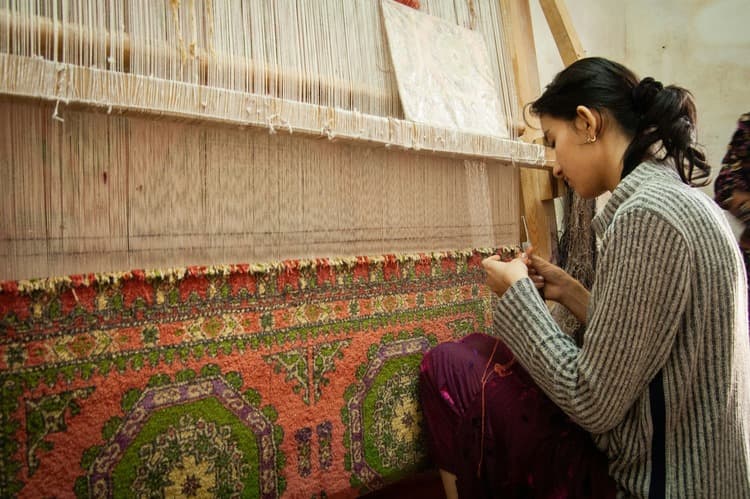
A hand-knotted rug is constructed by tying individual knots by hand around the foundation threads stretched on a loom.
The weaver creates the design gradually, knot by knot and row by row.
These knots form the pile of the rug and become part of its structure.
This is a detailed and time-intensive process. The finished design can include intricate motifs, carefully developed borders and complex color arrangements.
In many hand-knotted rugs, the pattern and knot structure can be seen on the reverse side. Fringes may also form from the foundation threads rather than being separately attached.
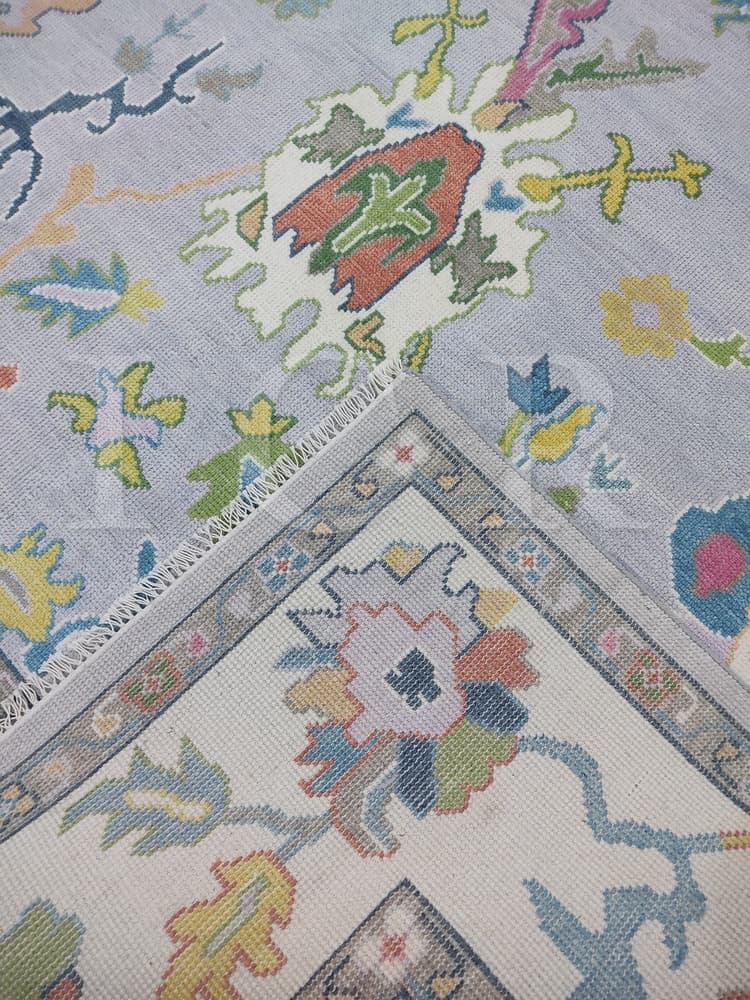
Hand-knotted construction is valued for the skill and attention involved in creating each individual knot.
What is a hand-tufted rug?
Hand-tufted rugs are created using a different technique.
A foundation cloth is stretched across a frame. Yarn is then inserted through the cloth using a hand-operated tufting tool.
Once the design has been completed, the rug is usually finished with backing materials that help secure the construction.
This technique offers considerable flexibility in creating different textures, pile effects and designs.
It can also be a more efficient production method than tying every individual knot by hand.
Hand-tufted rugs can be a good choice for people who appreciate handmade craftsmanship and are looking for a different balance of design, texture and price.
Hand-knotted vs. hand-tufted: the main differences
Swipe sideways to compare both columns.
| Feature | Hand-Knotted | Hand-Tufted |
|---|---|---|
| Construction | Individual knots tied by hand | Yarn inserted through a foundation cloth using a tufting tool |
| Foundation | Knots are tied into the rug foundation | Tufts are secured through backing materials |
| Design | Can support detailed and intricate patterns | Can support a wide range of textures and sculptural effects |
| Reverse side | Knot and design structure is often visible | Usually has a fabric backing |
| Production | More time-intensive | Generally more efficient to produce |
| Price | Often higher due to the labor involved | Often more accessible, depending on design and materials |
These are general construction differences. The exact characteristics of an individual rug depend on its materials, finishing, density and workmanship.
Which one should you choose?
There is no single answer for every home.
The right choice depends on what matters most to you.
Choose based on construction preference
If you appreciate the detail created by individually tied knots and the traditional weaving process, hand-knotted construction may appeal to you.
If you are drawn to varied surface textures, sculptural details and the creative flexibility of tufting, hand-tufted construction may be worth considering.
Consider the room
Think about the location where the rug will be used.
Consider furniture placement, everyday foot traffic, the amount of movement in the room and the look you want to achieve.
Do not judge a rug by its construction label alone. Two rugs made using the same method can still have very different characteristics.
Ask about the details
Before buying, look beyond the front surface.
Ask about:
- The exact fiber composition.
- Pile height and surface texture.
- Backing and finishing.
- Recommended cleaning and maintenance.
- Construction details.
- Whether the design is ready to ship or made to order.
These details are especially important when buying a handmade rug online.
Why construction matters
A rug is not simply a pattern placed on the floor.
Its construction influences the surface you feel, the way the design is formed and the way the rug is finished.
A little knowledge about manufacturing methods helps you make a more informed purchase.
At Indian Creative Rugs, our story includes hand-knotted, hand-tufted and other handmade rug traditions developed through decades of experience in Bhadohi, India. You can read more about that heritage in From Bhadohi to Your Home.